



Description
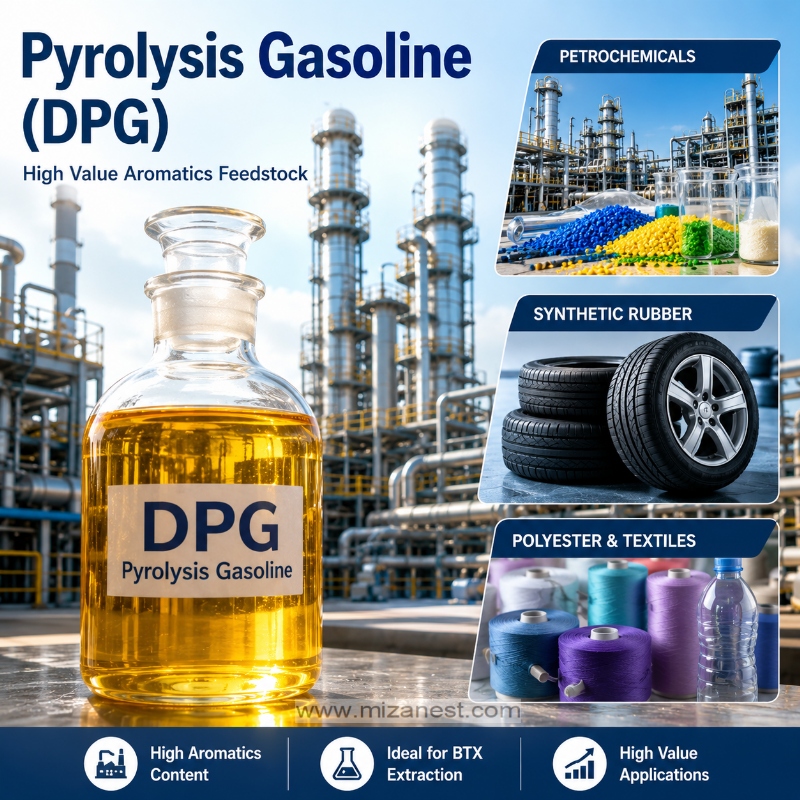
Pyrolysis Gasoline (DPG)
Pyrolysis Gasoline Supply for Global Petrochemical Industries
Pyrolysis Gasoline (Pygas) is a high-value liquid hydrocarbon stream generated as a by-product during the steam cracking process used for ethylene production. Rich in aromatic hydrocarbons such as Benzene, Toluene, and Xylenes (BTX), Pygas is considered one of the most important feedstocks for petrochemical and refining industries worldwide.
Due to its exceptionally high aromatic content, pyrolysis gasoline serves as a strategic raw material for producing plastics, synthetic fibers, synthetic rubber, solvents, resins, coatings, detergents, and numerous industrial chemicals. As global demand for aromatics continues to grow, Pygas remains a key commodity in international petrochemical trade.
What is Pyrolysis Gasoline?
Pyrolysis gasoline is produced during the thermal cracking of hydrocarbon feedstocks such as naphtha, LPG, condensates, and other light hydrocarbons in steam crackers. During this process, valuable by-products including ethylene, propylene, and pyrolysis gasoline are generated.
Pygas typically contains high concentrations of:
• Benzene
• Toluene
• Xylenes
• Styrene
• Olefins
• Diolefins
• Paraffins and Naphthenes
Because of this composition, pyrolysis gasoline is primarily utilized as a petrochemical feedstock rather than a transportation fuel.
Main Applications of Pyrolysis Gasoline
BTX Aromatics Extraction
The largest application of Pygas is the recovery of valuable aromatic compounds:
• Benzene
• Toluene
• Mixed Xylenes
These products form the backbone of numerous petrochemical value chains.
Benzene Production
Benzene extracted from pyrolysis gasoline is used in the production of:
• Styrene Monomer
• Phenol
• Acetone
• Cyclohexane
• Aniline
• Detergent Intermediates
Styrene and Polystyrene Manufacturing
Styrene produced from benzene is used for manufacturing:
• Polystyrene (PS)
• Expanded Polystyrene (EPS)
• ABS Resins
• Engineering Plastics
• Packaging Products
Polyester and PET Production
Paraxylene derived from Pygas is converted into PTA and subsequently used in:
• Polyester Fibers
• PET Bottles
• Textile Industry
• Industrial Packaging
Synthetic Rubber Industry
Pyrolysis gasoline contributes significantly to the production of synthetic rubbers used in:
• Tire Manufacturing
• Automotive Parts
• Industrial Hoses
• Conveyor Belts
• Footwear Industry
Hydrocarbon Resins
Aromatic compounds obtained from Pygas are utilized in manufacturing:
• Adhesives
• Hot-Melt Glues
• Printing Inks
• Sealants
• Industrial Coatings
Solvent Production
Hydrogenated and refined pyrolysis gasoline serves as a source for aromatic solvents used in:
• Paint Industry
• Coatings Industry
• Industrial Cleaning Products
• Chemical Processing Facilities
Gasoline Blending
After appropriate treatment and hydrogenation, pyrolysis gasoline may be used as a high-octane blending component in gasoline production.
Typical Specification of Pyrolysis Gasoline (DPG)
| Property | Unit | Typical Value |
|---|---|---|
| Appearance | Visual | Clear Yellow Liquid |
| Density @15°C | kg/m³ | 850 – 900 |
| Specific Gravity @15°C | – | 0.85 – 0.90 |
| Aromatics Content | wt% | 60 – 85 |
| Benzene | wt% | 30 – 65 |
| Toluene | wt% | 5 – 20 |
| Xylenes | wt% | 3 – 15 |
| Olefins | wt% | 10 – 30 |
| Sulfur | ppm | Max 500 |
| Water Content | ppm | Max 500 |
| Initial Boiling Point | °C | 30 – 50 |
| Final Boiling Point | °C | 180 – 210 |
| Flash Point | °C | Below -20 |
| Research Octane Number (RON) | – | 95 – 105 |
| Carbon Range | – | C5 – C12 |
Typical Chemical Composition
| Component | Typical Range (wt%) |
|---|---|
| Benzene | 30 – 65 |
| Toluene | 5 – 20 |
| Xylenes | 3 – 15 |
| Styrene | 2 – 10 |
| Olefins & Diolefins | 10 – 30 |
| Paraffins & Naphthenes | 5 – 20 |
Advantages of Pyrolysis Gasoline
✔ High concentration of valuable aromatic hydrocarbons
✔ Excellent feedstock for BTX extraction units
✔ Strong demand from petrochemical industries
✔ Significant downstream value addition potential
✔ Suitable for multiple chemical production chains
✔ Widely traded in international petrochemical markets
✔ Strategic raw material for plastics and synthetic fibers
✔ Supports production of high-value chemical intermediates
Major End-Use Industries
• Petrochemical Complexes
• Aromatics Extraction Plants
• Benzene Production Units
• Styrene Manufacturers
• ABS Producers
• Polystyrene Manufacturers
• Synthetic Rubber Producers
• Polyester Manufacturers
• PET Resin Producers
• Hydrocarbon Resin Manufacturers
• Solvent Producers
• Refining and Fuel Blending Facilities
Major Importing Countries and Markets
The largest importers and consumers of pyrolysis gasoline are countries with extensive petrochemical infrastructure and aromatics extraction capacity.
Asia
• China
• India
• South Korea
• Japan
• Taiwan
• Singapore
Asia represents the largest global market for pyrolysis gasoline due to its massive petrochemical and manufacturing sectors.
Europe
• Netherlands
• Belgium
• Germany
• Italy
• Spain
European demand is primarily driven by chemical production, automotive manufacturing, coatings, plastics, and synthetic materials industries.
Middle East
• United Arab Emirates
• Saudi Arabia
• Turkey
Growing investment in petrochemical infrastructure continues to support demand throughout the region.
Emerging Markets
• Bangladesh
• Pakistan
• Vietnam
• Thailand
• Indonesia
These countries are rapidly expanding their petrochemical and manufacturing industries, creating increasing demand for aromatic feedstocks.
International Trade Outlook
Global demand for pyrolysis gasoline continues to grow alongside increasing consumption of plastics, synthetic fibers, packaging materials, automotive components, and specialty chemicals.
The expansion of aromatics extraction units across Asia and the Middle East is expected to further strengthen demand for Pygas. As a result, pyrolysis gasoline remains one of the most valuable and strategically important feedstocks within the global petrochemical industry.
Pyrolysis Gasoline Export Supply
We offer reliable export supply of Pyrolysis Gasoline (Pygas) for petrochemical, refining, and chemical industries worldwide.
Available services include:
• Bulk Vessel Shipments
• Long-Term Supply Agreements
• Spot Cargo Deliveries
• International Export Documentation
• Flexible Commercial Terms
• Competitive Pricing Based on International Markets
For detailed specifications, availability, pricing, and shipment schedules, please contact our export team.

Reviews
There are no reviews yet.