



Description
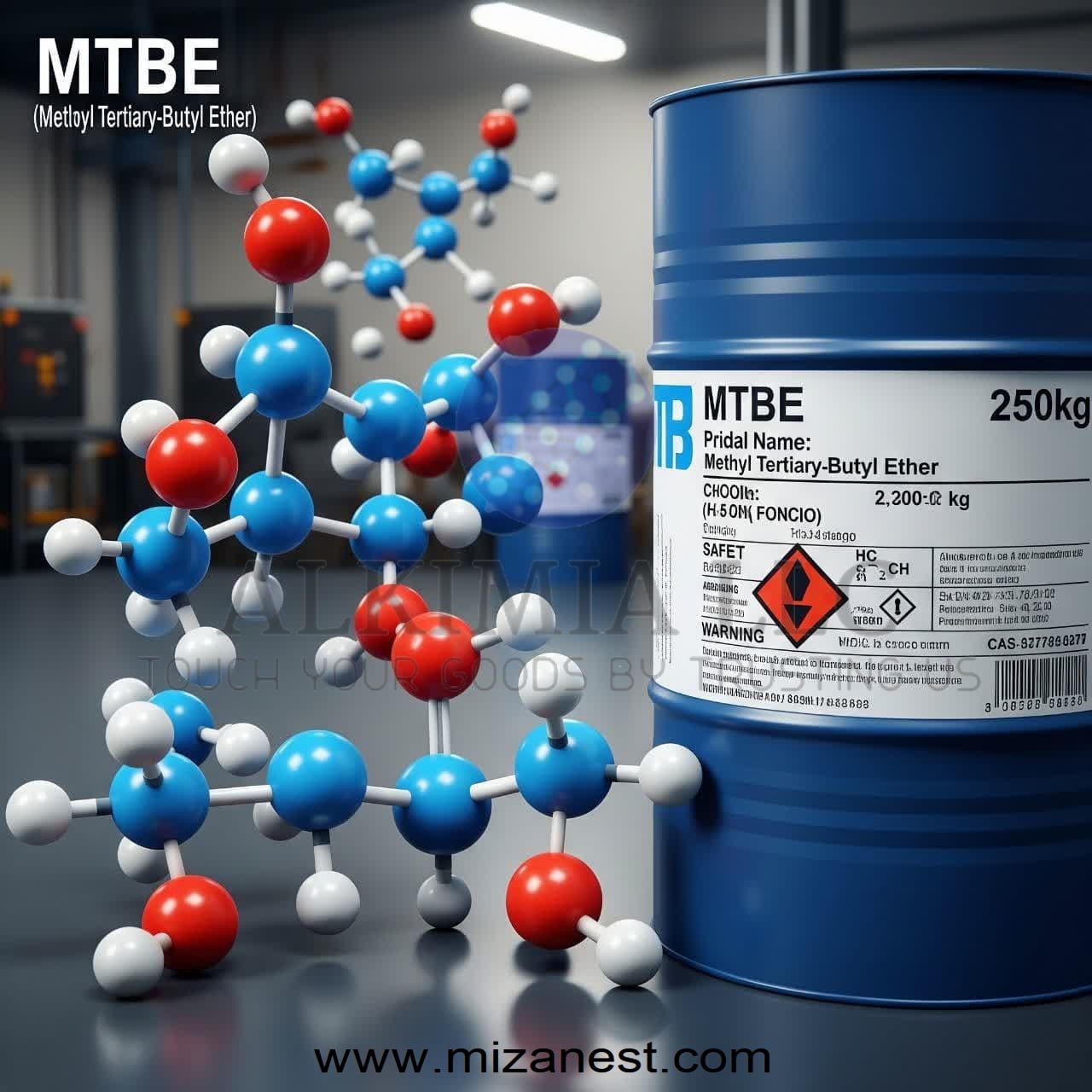
MTBE (Methyl Tertiary-Butyl Ether)
Manufacturer: Shimi Baft Petrochemical Company
MTBE (Methyl Tertiary-Butyl Ether) is a high-octane oxygenated fuel additive widely used in modern gasoline blending. It is a volatile, flammable, colorless liquid belonging to the ether family and plays a critical role in improving fuel combustion efficiency and engine performance. Refiners and fuel manufacturers use MTBE primarily to increase the octane number of gasoline while reducing harmful exhaust emissions.
For decades, MTBE has been considered one of the most effective alternatives to lead-based gasoline additives such as tetraethyl lead. Humanity spent years putting toxic lead into fuel and then acting surprised when brains objected to it. Industrial history has the energy of a raccoon operating heavy machinery.
Due to its favorable blending characteristics, stable chemical structure, and competitive production economics, MTBE remains one of the most commonly traded gasoline components in regional and international fuel markets.
Chemical and Physical Characteristics of MTBE
MTBE is produced through the reaction of isobutylene and methanol in the presence of an acid catalyst. The resulting compound possesses several important properties that make it ideal for fuel blending operations:
✅ High octane enhancement capability
✅ Excellent miscibility with gasoline
✅ Stable combustion behavior
✅ Reduced engine knocking tendency
✅ Improved fuel oxygenation
✅ Lower carbon monoxide emissions during combustion
Its relatively low vapor pressure also allows refiners to formulate gasoline blends that comply with seasonal fuel specifications and environmental regulations.
Technical Specifications of MTBE
Composition Table
(Based on Producer’s Certificate of Analysis)
Test Specification Unit
MTBE Purity Min 98 wt.%
Methanol Max 0.7 wt.%
TBA Max 0.38 wt.%
DMA Nil wt.%
C5+ Hydrocarbons Max 1 wt.%
C4 Hydrocarbons Max 0.5 wt.%
Water Content Max 500 ppm
Reid Vapor Pressure (RVP) 3.5 psi
Density 0.74 g/cm³
Temperature Reference 25 °C
Detailed Explanation of the Datasheet
MTBE Purity: Minimum 98 wt.%
A purity level above 98% indicates that the product is highly refined and suitable for industrial gasoline blending applications. High-purity MTBE ensures:
✅ Better octane performance
✅ Stable blending behavior
✅ Reduced contamination risks
✅ Improved storage stability
Lower purity grades may negatively affect fuel consistency and refinery formulation accuracy.
Methanol Content: Maximum 0.7 wt.%
Residual methanol is a common byproduct in MTBE production. Excessive methanol content can create operational and environmental concerns because methanol:
❌ Increases water absorption risk
❌ May contribute to phase separation in fuel systems
❌ Can affect fuel compatibility with certain materials
Maintaining methanol below 0.7 wt.% demonstrates controlled production quality and proper purification processes.
TBA (Tertiary Butyl Alcohol): Maximum 0.38 wt.%
TBA is another secondary compound generated during MTBE synthesis. Low TBA content is important because excessive concentrations may influence:
✅ Fuel volatility
✅ Combustion quality
✅ Long-term storage characteristics
A low TBA value reflects a stable and commercially acceptable MTBE grade.
DMA: Nil
DMA (Dimethyl Acetal or related impurities depending on refinery analysis method) is reported as “Nil,” indicating no detectable contamination within testing limits. This is an important indicator of production cleanliness and process control.
C5+ and C4 Hydrocarbon Content
Hydrocarbon impurities affect the volatility and blending performance of MTBE.
C5+ Hydrocarbons: Max 1 wt.%
These heavier hydrocarbons can alter combustion properties and reduce formulation precision.
C4 Hydrocarbons: Max 0.5 wt.%
Lower C4 levels improve storage stability and maintain fuel specification consistency.
The controlled impurity profile helps refiners achieve predictable gasoline quality.
Water Content: Maximum 500 ppm
Water contamination is one of the most important quality considerations for MTBE.
Excessive water may lead to:
❌ Fuel instability
❌ Corrosion risks
❌ Storage complications
❌ Transportation problems
A maximum water content of 500 ppm is generally acceptable for export-grade MTBE used in international fuel markets.
Reid Vapor Pressure (RVP): 3.5 psi
RVP measures fuel volatility and evaporation tendency.
An RVP value of 3.5 psi indicates:
✅ Controlled evaporation characteristics
✅ Suitable blending flexibility
✅ Better handling during storage and transportation
This property is especially important in warm climates and export logistics.
Density: 0.74 g/cm³ at 25°C
Density directly influences fuel blending calculations and cargo volume management.
A density of 0.74 g/cm³ provides:
✅ Efficient blending ratios
✅ Predictable refinery calculations
✅ Consistent energy distribution in fuel mixtures
Refineries and trading companies often use density data for cargo reconciliation and commercial documentation. Because apparently humanity cannot move liquids across oceans without arguing about decimals for three weeks.
Main Applications of MTBE
Gasoline Octane Enhancement
The primary application of MTBE is increasing gasoline octane number. High-octane fuel improves engine efficiency and prevents knocking in internal combustion engines.
MTBE is commonly blended into:
✅ Regular gasoline
✅ Premium gasoline
✅ Reformulated fuels
✅ High-performance fuel products
Cleaner Fuel Formulations
As an oxygenate additive, MTBE helps fuel burn more completely. This contributes to reduced emissions of:
✅ Carbon monoxide (CO)
✅ Unburned hydrocarbons
✅ Certain combustion-related pollutants
For this reason, MTBE became widely adopted in regions implementing stricter air-quality standards.
Refinery and Petrochemical Operations
MTBE is also used in refinery blending pools and petrochemical feedstock management systems due to its favorable physical properties and compatibility with hydrocarbon streams.
Advantages of MTBE in International Fuel Markets
Strong Octane Performance
MTBE provides efficient octane boosting at relatively low blending concentrations, making it economically attractive for refiners.
Competitive Production Economics
Countries with integrated petrochemical infrastructure, including Iran, can produce MTBE at competitive costs due to access to methanol and refinery feedstocks.
High Export Demand
MTBE continues to be traded across:
✅ Central Asia
✅ Africa
✅ Southeast Asia
✅ Middle Eastern markets
✅ Neighboring regional fuel markets
Demand is especially strong in countries with expanding transportation sectors and refining limitations.
Safety and Environmental Considerations
MTBE must be handled according to industrial chemical safety standards.
Storage Recommendations
✅ Store in approved metal tanks or drums
✅ Keep away from sparks, heat, and ignition sources
✅ Use proper grounding during loading and unloading
✅ Maintain adequate ventilation in storage areas
Transportation Considerations
MTBE is typically transported via:
✅ ISO tank containers
✅ Road tankers
✅ Bulk chemical vessels
✅ Steel drums for smaller quantities
International shipments usually require:
✅ COA (Certificate of Analysis)
✅ MSDS documentation
✅ Commercial invoice and packing list
✅ Compliance with hazardous chemical transport regulations
Environmental Concerns
Although MTBE improves fuel combustion, it is highly soluble in water and may contaminate groundwater if released into the environment.
Industrial users should therefore implement:
✅ Spill containment systems
✅ Leak monitoring procedures
✅ Controlled transfer operations
✅ Emergency response protocols
Iranian MTBE Supply and Export Potential
Iran is among the important MTBE producers in the region due to its extensive petrochemical infrastructure and methanol production capacity.
Iranian MTBE is recognized in export markets for:
✅ Competitive pricing
✅ Stable refinery-grade specifications
✅ Bulk supply capability
✅ Regional logistical access
Export destinations commonly include neighboring countries, Africa, Central Asia, and Asian fuel trading hubs.
Packaging and Delivery Conditions
Available delivery options may include:
✅ Bulk tanker shipment
✅ ISO tank containers
✅ Special metal drums
✅ Vessel cargo supply for large-volume buyers
Supporting export documents:
✅ Certificate of Analysis (COA)
✅ Material Safety Data Sheet (MSDS)
✅ Commercial documentation
✅ Inspection certificates upon request
Delivery terms can be arranged according to customer requirements and international trade agreements including FCA , FOB, structures.
Contact for MTBE Supply and Export Inquiries
For technical specifications, pricing, export procedures, refinery-grade supply discussions, or commercial cooperation:
📧 Email: sales@alkimia.am
📞 WhatsApp: +989303735845
Reviews
There are no reviews yet.