



Description
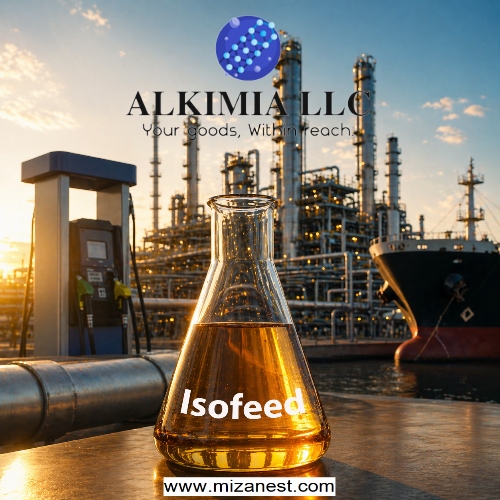
Isofeed ; A key feedstock for gasoline production in modern refineries
Isofeed is a heavy petroleum cut obtained from the vacuum column of crude distillation units. It is mainly used as feedstock for hydrocracking units (Hydrocracking / Isomax), where it is converted into lighter, high-value refinery streams, especially naphtha for gasoline production.
Its real economic value is not “being oil” but being efficiently destroyed into gasoline precursors.
Role of Isofeed in gasoline production
In hydrocracking units, Isofeed undergoes catalytic cracking under high hydrogen pressure. Heavy hydrocarbons are broken into lighter fractions.
Main outputs include:
✔ Naphtha (feed for catalytic reforming → gasoline)
✔ Middle distillates
✔ LPG as a light by-product
Naphtha is then upgraded in catalytic reforming to increase octane number, forming finished gasoline.
So yes, your fuel tank is basically the end of a very violent molecular breakup process.
Isofeed conversion cycle
✔ Feed enters hydrocracking unit
✔ High-pressure hydrogen + catalyst reaction
✔ Heavy molecules cracked into light fractions
✔ Naphtha separated
✔ Naphtha sent to reforming unit
✔ High-octane gasoline produced
Simple idea: heavy waste in → premium fuel out.
Technical Specifications of Isofeed
| Property | Value | Unit |
| Ash | < 0.001 | wt% |
| C.R | 0.094 | wt% |
| Colour | 2–4 | Number |
| Density | 900–915 | kg/m³ |
| Final boiling point | 506–530 | °C |
| Flash point | 180–220 | °C |
| Flash point (Closed Cup) | 310–340 | °C |
| IBP 5% evaporated | 330–379 | °C |
| IBP 10% evaporated | 382–394 | °C |
| IBP 30% evaporated | 390 | °C |
| IBP 50% evaporated | 429–438 | °C |
| IBP 70% evaporated | 455 | °C |
| IBP 90% evaporated | 481–489 | °C |
| IBP 95% evaporated | 491–507 | °C |
| Initial boiling point | 312 | °C |
| Kinematic viscosity (50°C) | 17.4 | cSt |
| Kinematic viscosity (100°C) | 4.9 | cSt |
| Pour point | 25–35 | °C |
| P.P | 30 | °C |
| Specific gravity | 0.9070 | – |
| Sulfur | 1.5–2.5 | wt% |
| Total sulfur (T.S) | 1.82 | wt% |
| Total nitrogen | 800–1500 | ppm |
| W/S | Tr | vol.% |
Why this matters for gasoline production
✔ High boiling range means deep hydrocracking potential
✔ Significant sulfur and nitrogen require hydrotreating integration
✔ Density and viscosity confirm heavy feed classification
✔ Wide distillation curve supports multi-product conversion
In short, Isofeed is not a “product” in the normal sense. It is a controlled opportunity to generate gasoline through thermal and catalytic violence.
Conclusion
Isofeed is a strategic refinery feedstock that maximizes gasoline yield by converting heavy hydrocarbons into naphtha and then high-octane gasoline through hydrocracking and reforming.
Modern refineries don’t just use Isofeed. They depend on it to push gasoline output beyond what crude oil alone would allow.
And yes, chemically speaking, it is basically refined chaos with economic value attached.
Reviews
There are no reviews yet.