



Description
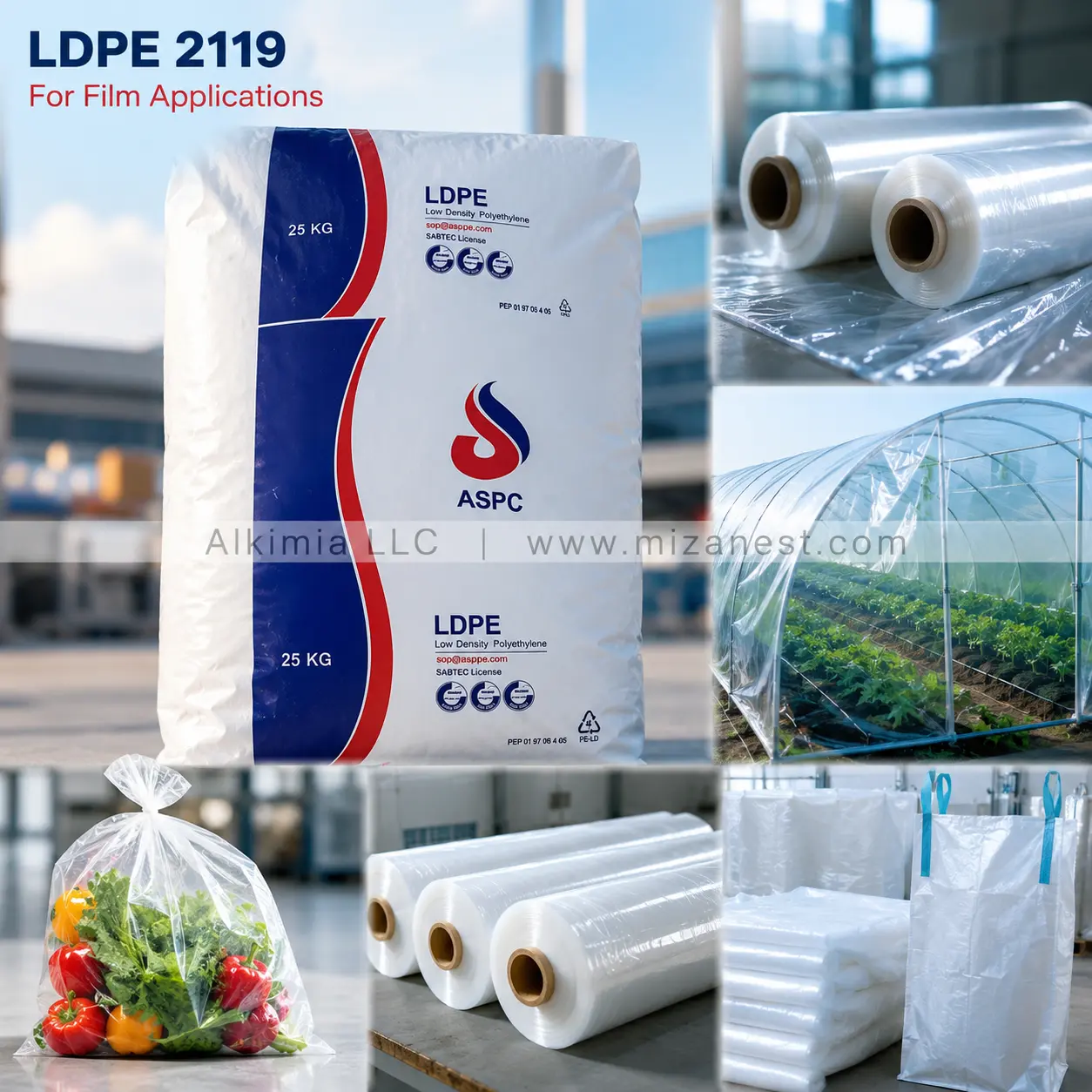
LDPE LFI 2119 | Arya Sasol Polymer Company
High-Clarity LDPE Resin for Blown Film Applications
LDPE LFI 2119 is a premium Low Density Polyethylene (LDPE) resin manufactured by Arya Sasol Polymer Company (ASPC) under SABTEC technology. Supplied in high-quality pellets, this grade has been specifically developed for blown film extrusion, offering an outstanding balance of optical clarity, mechanical strength, and stable processing performance.
Designed for film thicknesses ranging from 20 to 50 microns, LDPE LFI 2119 is widely used in flexible packaging, laminated films, industrial liners, shopping bags, agricultural films, and various consumer packaging applications. Its consistent melt behavior enables manufacturers to achieve excellent bubble stability, uniform film thickness, and attractive surface appearance throughout long production runs.
Unlike many conventional LDPE grades, LFI 2119 combines low haze, excellent gloss, and reliable tear resistance, allowing converters to produce premium packaging films without sacrificing processing efficiency. This balance of performance has made it one of the preferred film grades among polymer converters in regional and international markets.
Whether producing food packaging, industrial films, or multilayer flexible packaging, manufacturers benefit from the resin’s dependable quality, high productivity, and excellent finished product appearance.
What is LDPE LFI 2119?
LDPE LFI 2119 is a specialized low-density polyethylene resin developed primarily for blown film applications. It belongs to the family of flexible polyethylene materials known for their excellent transparency, flexibility, sealing performance, and processability.
Compared with standard LDPE grades, LFI 2119 offers a carefully optimized combination of:
✔ High optical clarity
✔ Excellent mechanical strength
✔ Stable melt flow
✔ Reliable bubble stability
✔ Superior film appearance
These characteristics allow film manufacturers to produce high-quality packaging materials while minimizing production waste and maintaining consistent product quality.
The resin is suitable for both mono-layer and multilayer film structures and performs exceptionally well in continuous industrial production where process stability is essential.
Key Features
LDPE LFI 2119 offers numerous advantages for blown film manufacturers.
✔ Excellent transparency with low haze
✔ Bright, glossy film appearance
✔ Stable Melt Flow Index (1.9 dg/min)
✔ Outstanding tear resistance
✔ High impact strength
✔ Excellent flexibility
✔ Reliable heat sealing performance
✔ Stable bubble formation during extrusion
✔ Uniform film thickness
✔ Consistent pellet quality
✔ Excellent processability
✔ Suitable for multilayer film production
These features help reduce production downtime while improving overall product quality.
Technical Specifications
| Property | Value | Test Method |
|---|---|---|
| Density | 0.921 g/cm³ | ISO 1183 (A) |
| Melt Flow Index (190°C / 2.16 kg) | 1.9 dg/min | ISO 1133 |
| Impact Strength | 26 kJ/m² | ASTM D4272 |
| Tear Resistance (TD) | 25 kN/m | ISO 6383-2 |
| Tear Resistance (MD) | 60 kN/m | ISO 6383-2 |
| Elastic Modulus (TD) | 200 MPa | ISO 527-1,3 |
| Elastic Modulus (MD) | 190 MPa | ISO 527-1,3 |
| Haze | 9% | ASTM D1003 A |
Physical Properties Explained
The physical characteristics of LDPE LFI 2119 directly influence its processing behavior and the performance of the final packaging film. Understanding these properties helps converters select the most suitable material for their production requirements.
Density
LDPE LFI 2119 has a density of 0.921 g/cm³, placing it within the ideal range for flexible blown film production.
This density contributes to several important advantages, including improved softness, better flexibility, enhanced heat-sealing performance, and lower film weight. It also helps produce films that maintain an excellent balance between mechanical strength and optical clarity.
Lower-density polyethylene generally provides greater flexibility than higher-density polyethylene grades, making it particularly suitable for applications where repeated folding, stretching, and handling are required.
Melt Flow Index (MFI)
The Melt Flow Index (MFI) of LDPE LFI 2119 is 1.9 dg/min, measured at 190°C under a 2.16 kg load according to ISO 1133.
This value is carefully optimized for blown film extrusion.
A controlled melt flow allows processors to maintain stable bubble formation while producing films with consistent thickness and uniform mechanical properties.
Benefits of this MFI include:
✔ Excellent extrusion stability
✔ Uniform gauge control
✔ Smooth resin flow
✔ Better production efficiency
✔ Reduced risk of melt fracture
✔ Improved dimensional consistency
For manufacturers operating high-capacity blown film lines, a stable MFI contributes directly to higher productivity and reduced material waste.
Mechanical Properties Explained
Mechanical performance is one of the primary reasons why LDPE LFI 2119 is widely used in premium packaging films. The resin combines flexibility with excellent resistance to impact and tearing, ensuring reliable performance throughout the product’s life cycle.
High Impact Strength
LDPE LFI 2119 offers an impact strength of 26 kJ/m², enabling films to absorb sudden mechanical shocks without failure.
During transportation, storage, and pallet handling, packaging materials are frequently exposed to impacts from boxes, pallets, or handling equipment. A high impact strength minimizes punctures and reduces the likelihood of package failure, protecting both the packaged product and the manufacturer’s reputation.
This property is especially valuable for industrial packaging, agricultural films, and heavy-duty bags where durability is essential.
Excellent Tear Resistance
One of the most important characteristics of blown film materials is resistance to tearing.
LDPE LFI 2119 provides:
- Machine Direction (MD): 60 kN/m
- Transverse Direction (TD): 25 kN/m
This balanced tear resistance helps films withstand mechanical stress during filling, transportation, and daily use. Strong tear resistance also extends the service life of packaging materials while reducing product losses caused by accidental tearing.
Elastic Modulus
The elastic modulus values of approximately 200 MPa (TD) and 190 MPa (MD) provide an ideal balance between stiffness and flexibility.
This allows films to maintain their shape while remaining flexible enough for packaging applications that require folding, stretching, or repeated handling.
Proper stiffness also contributes to improved machinability during automatic packaging operations.

Reviews
There are no reviews yet.