



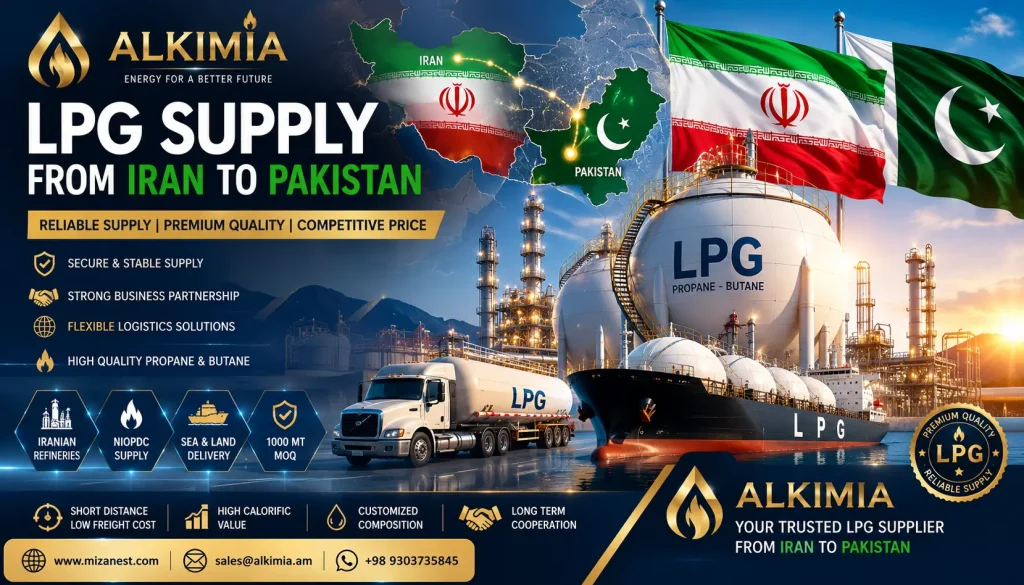
Pakistan LPG Market: Demand, Shortages and Import Needs
Pakistan’s LPG demand far exceeds its domestic supply. In 2022–23 local refineries and gas fields produced about 727,000 MT of LPG, while only ~269,000 MT was imported via Port Qasim. Even accounting for local output (≈73% of supply), a significant shortfall remains: domestic consumption is estimated at 4,600–6,000 MT per day (1.7–2.2 million MT/yr). The closure of Pakistan’s largest LPG plant (JJVL, 525 MT/day) in 2024 widened the gap, forcing reliance on imports to meet about 60–80% of demand. The Oil & Gas Regulatory Authority (OGRA) reports that in 2023 around 40–50% of LPG demand was met by imports, reflecting chronic supply constraints and frequent black-market shortages.
Figure: Trucks carrying LPG into Pakistan at the Torkham border (Courtesy: Pakistani Customs).
Overland imports – historically dominated by Iranian supplies – now include new routes. Before mid-2026, up to ~100–150 Iranian LPG tankers crossed daily at Taftan/Mirjaveh. Border closures during the Iran conflict have since cut shipments to ~15–25 trucks/day, causing sharp price spikes. Meanwhile, Pakistan has diversified via Afghanistan: in 2023 private trader Epic Energy shipped 5,000 MT from Uzbekistan and plans similar Turkmen/Russian imports. New transit routes (Gwadar–Gabd, Lyari–Ormara, Taftan–Gwadar, etc.) were also designated in 2026 to sustain Iran trade amid a Red Sea/Strait of Hormuz blockade. Still, with many northern and western borders closed or insecure, sea imports through Karachi (Port Qasim) remain vital.
Major LPG Suppliers and Trade Partners
Pakistan’s LPG imports are supplied by a mix of state and private firms, and sourced globally.
State traders: SSGC LPG Ltd (SLL) and Pakistan State Oil are key, though even SSGC holds only ~8% of cylinder market share.
Private importers: Data from Jan 2024 show SSGC LPG (state) imported ~28,460 MT, followed by Ayan Energy (6,619 MT), Makran Gas & Oil (6,270 MT), OK Gas (3,279 MT), Mecom (2,119 MT) and other local LPG companies. In total some 55,800 MT entered in that month through Karachi. OGRA notes ~280 registered marketing firms (about 10 hold over half the market), underscoring many small distributors.
LPG comes by sea tankers from global exporters and by land tankers from Iran, Central Asia or (less commonly) the GCC. Traditionally Pakistan has imported LPG “by sea from Middle East countries and by land route from Iran”.
The country’s primary sea suppliers are now Qatar and UAE (through global LPG carriers), which together account for most imports by value. For example, a 2025 report cites Qatar supplying multi-year contracts for 3–4,000 MT/day of LPG to Pakistan.
By mid-2024, Pakistan’s import bill for LPG was dominated by Qatar (≈$3.5B) and Iran (≈$0.7B). In 2024 Pakistan spent about $687 million on LPG from Iran – roughly two-thirds of its Iranian trade – making Iran a top supplier by value. Other significant exporters to Pakistan include Nigeria, Iraq and the U.S. (LPG by tanker from the U.S. has begun under new deals) and even regional traders from Central Asia.
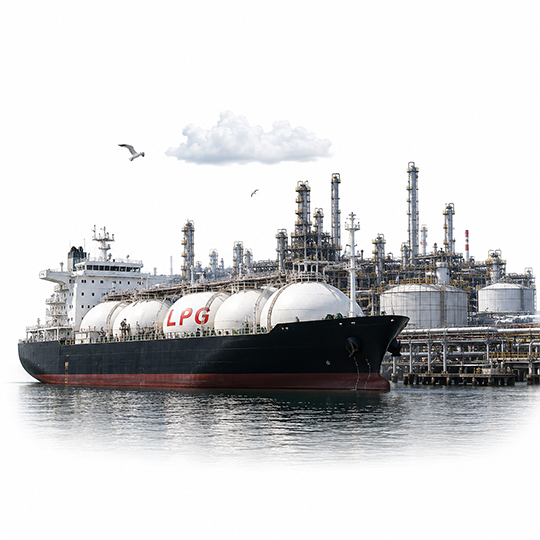
Figure: An LPG tanker (“JOAN”) loading at a port. Iran has expanded its LPG tanker fleet and terminals to reach Asian markets.
Sea shipments use specialized LPG carriers. Reports note that Iran has expanded its VLGC fleet and upgraded its export terminals, enabling it to ship more LPG. Most imports dock at Karachi’s Port Qasim (Pakistan’s sole LPG import terminal). By policy Pakistani imports face low trade barriers: OGRA/Ministry data record that all import duties on LPG have been removed, and GST on LPG was cut (from 17% to 10%). These incentives aim to boost supplies and curb black-market pricing.
Pakistan’s Regulatory Framework and Trade Rules
LPG import and marketing in Pakistan are tightly regulated by OGRA and the Petroleum Division. Key requirements include OGRA licenses for foreign LPG suppliers and local marketers, plus Customs oversight at ports and land crossings. In practice, only registered companies and state entities can import LPG.
Official policy has sought to liberalize trade: recent measures removed the regulatory duty on LPG and reduced sales tax to encourage enhanced imports. Pakistan also allows barter arrangements under mutual agreements: notably, in late 2021 Islamabad endorsed a rice-for-LPG barter with Iran, exchanging Pakistani rice for Iranian LPG through private chambers. This was structured to bypass formal banking under sanctions.
Tariffs on LPG imports are minimal, and petrochemical inputs enjoy tax holidays (e.g. zero import duty on LPG storage/equipment in 2024 policy). Safety and quality must meet OGRA’s codes (e.g. NFPA/ANSI standards) for storage, dispensing and composition.
LPG is defined as a mix of propane, butane (plus minor ethane/pentane) – Pakistan’s specs align with international norms. (For reference, Iranian LPG often contains 15–50% propane and 50–85% butane.)
Pakistan also maintains LPG reserves in buffer storage (pipeline-connected and off-grid tanks) to smooth seasonal demand (peak winter use rises ~25%).
On the Iranian side, exporters like NIOPDC and petrochemical/condensate plants are overseen by Iran’s Ministry of Petroleum and NIOC. US/UN sanctions complicate banking, so Iranian LPG is usually shipped via front companies or barter. Still, Iran treats LPG as a non-oil export (it made up ~24% of non-oil export earnings in FY2024) and sells it at deep discounts in Asia.
Any importer of Iranian LPG (e.g. Alkimia LLC) must navigate export permits by the National Iranian Oil Products Distribution Co. (NIOPDC) and ensure payment compliance (often in rials or via third-party countries).
Supply Routes: Land and Sea Logistics
Pakistan and Iran share a 909 km border in Balochistan. The main formal LPG crossing is Gabd-Rimdan/Taftan, connecting to Iran’s Mirjaveh–Zahedan road network. Dozens of tankers daily used this route pre-conflict.
Disruptions (e.g. tightened customs in mid-2026 or Iranian war blockade) have halted Gabd traffic, stranding hundreds of bowsers and driving prices above Rs400/kg in Karachi/Punjab. Other Iran-Pak routes (Chabahar port via Iran, and Indian Ocean through Gwadar/Port Qasim) serve as alternatives.
Sea shipments traverse the Arabian Sea/Hormuz corridor. Major LPG carriers move cargoes from Middle East and even U.S./Russia via Suez (route 1), or via Africa/Aden around (route 2) to Karachi. Delays (e.g. Red Sea/Hormuz tensions) can force detours through the Indian Ocean.
Inland, Pakistan’s limited pipeline network (LSNG for propane but pipeline grid for natural gas) means all inland LPG distribution is by road tanker to bottling plants and cylinders. Quetta’s Hazar Ganji terminal is a key land-side storage for Iranian LPG: prior to 2026 it held dozens of LPG bowsers from Iran.
Afghan Transit
Afghan transit has become notable. In 2023, Pakistan opened Torkham (NW Frontier) to LPG imports from Uzbekistan/Turkmenistan.
A series of 21 trucks (5,000 MT) entered via Torkham (bypassing Iran) and authorities expect up to 10,000 MT more from Central Asia and Russia. These Central Asian land links (through Afghanistan) and revised transit orders (routes via Gwadar–Taftan, etc.) are now part of Pakistan’s strategy to mitigate supply risk.
Recommendations for Importers and Alkimia LLC
For importers seeking LPG supply, key factors include volume, quality, compliance and route security.
Iran offers competitive LPG pricing and ample volumes: its LPG output surged to ~13.5 million tons/year by 2023, with a portion allocated for export. Verified Iranian suppliers (e.g. NIOPDC-backed firms) can deliver 1000+ MT loads, with typical LPG blends of propane/butane as per contract.
Importers should ensure OGRA registration, arrange multilateral transit bonds if using land routes, and monitor Pakistan’s import policy (e.g. duty exemptions) to optimize costs.
Alkimia LLC Supply Proposal
In summary, Alkimia LLC can reliably supply Pakistan with high-quality Iranian LPG under NIOPDC oversight.
We offer mixed propane-butane LPG (varied compositions per requirement) at 1000 MT minimum order. Our product originates from Iran’s leading refineries and gas plants (e.g. South Pars complexes), which meet stringent quality specs.
With both sea (via Gwadar/Port Qasim) and land (Taftan/Quetta, Afghanistan corridors) delivery options, we ensure timely, large-scale shipments.
Customers can thus leverage Iran’s abundant LPG output (nearly 60% of Pakistan’s LPG is traditionally sourced from Iran) to fill any remaining market gap.
Good references confirm that Iranian LPG is a top export and available in large volumes, making it an attractive supply source for Pakistan’s importers.
Sources
Official data and reports on Pakistan’s LPG supply and imports; news and market analysis on Pakistan–Iran LPG trade, logistics, transit routes, regulatory policies, import volumes, pricing trends, and regional supply developments.
All LPG refineries
you can see all reputable LPG refineries from Iran in this page
